

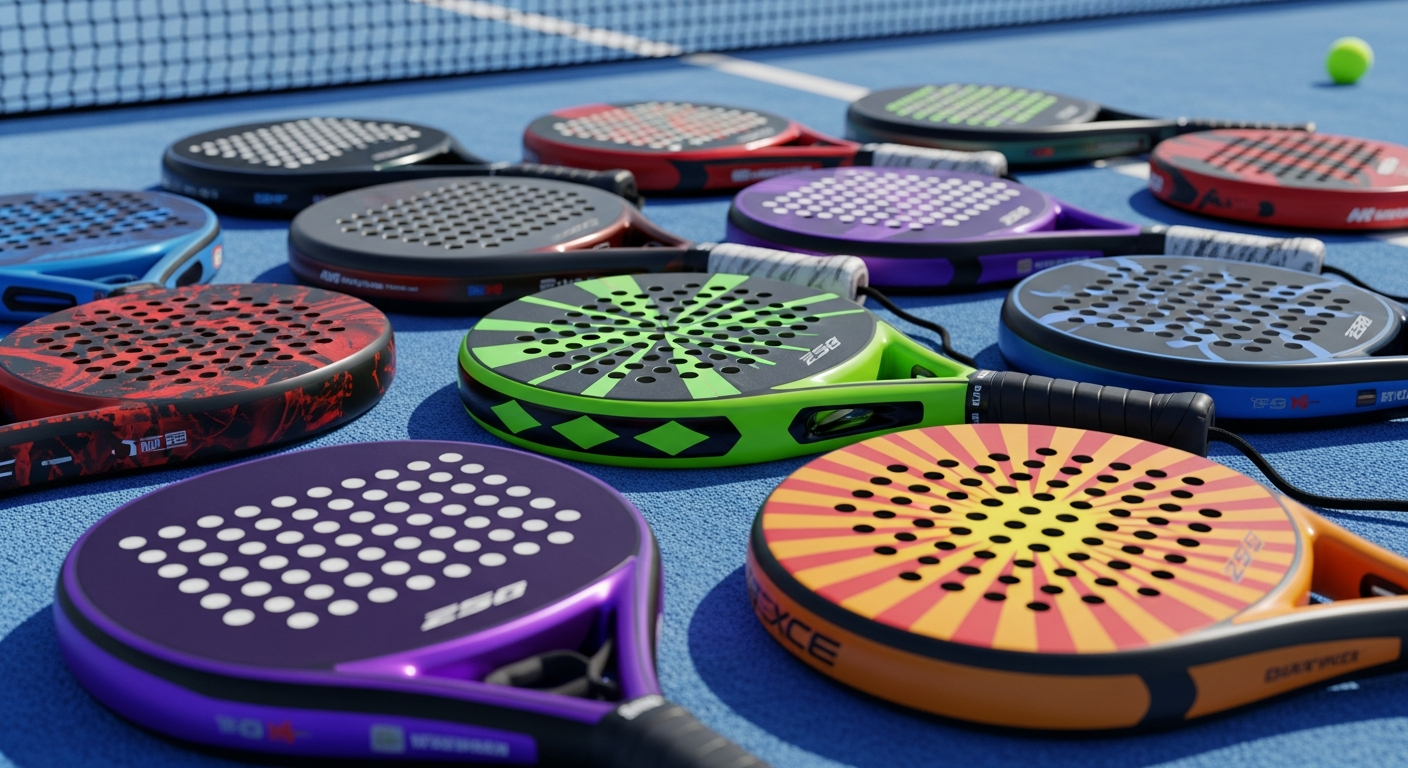
A padel racket is the most important piece of equipment you’ll buy – and one of the hardest to choose when you’re just starting out. The market offers dozens of models varying in shape, weight, material, and price. This guide walks you through all the key parameters and tells you where to start – based on specific models from Babolat and Oxdog.
What Is a Padel Racket Made Of?
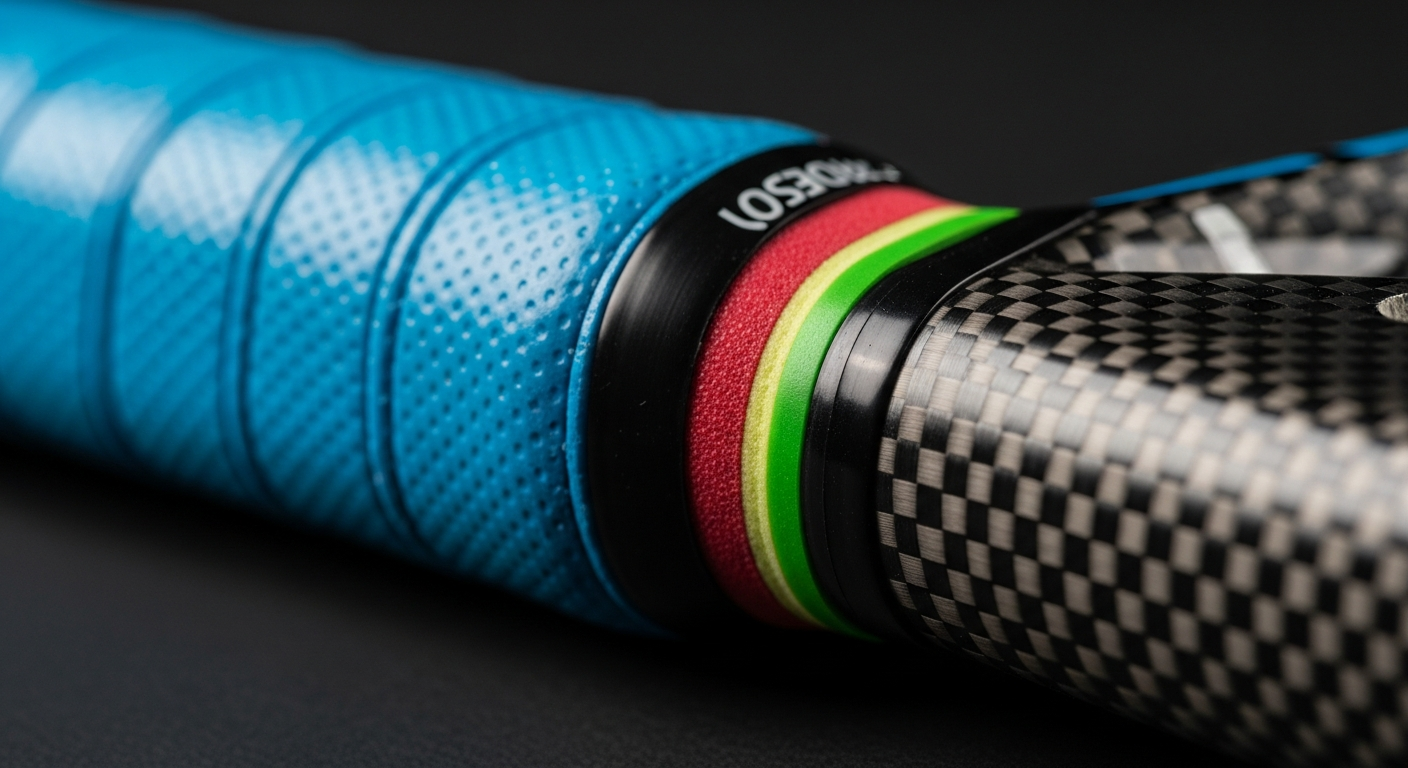
A padel racket consists of three main components: the frame, the hitting surface, and the core. Each affects how the racket performs in play.
Frame and Surface Materials
Two materials dominate padel racket construction: carbon fibre and fibreglass. Carbon provides hardness, precision, and stability – full-carbon rackets are preferred by advanced players. Fibreglass offers greater flexibility and comfort, resulting in less vibration in the elbow and wrist. Most recreational rackets are blends of both materials.
Babolat uses its proprietary Carbon Flex technology, which combines the advantages of both materials: the hardness of carbon fibre with the flexibility of fibreglass. Oxdog builds some models with layered composites reinforced with the PowerRibs system – internal ribs that increase ball speed.
The Core – EVA or Foam?
The interior of the racket is filled with foam – most commonly EVA (Ethylene-Vinyl Acetate) or polyurethane Foam. EVA is harder, returns the ball faster, and offers greater control. Foam is softer, absorbs vibration, and is more comfortable – which is why beginners’ rackets often use it. Babolat uses Black EVA in many models, combining softness with control.
Three Padel Racket Shapes – Which One to Choose?
The racket head shape is one of the key parameters that influences playing style. There are three basic shapes: round, teardrop (hybrid), and diamond.
Round – Control and Forgiveness
Round-shaped rackets have their balance point shifted towards the handle – making them lighter to manoeuvre and easier to control. Their main advantage is a large sweet spot, which forgives off-centre hits. For a beginner, this is the best choice – the faster you master your technique, the faster you’ll advance.
Teardrop (Hybrid) – The Golden Middle
The teardrop shape is a compromise between round and diamond. The sweet spot sits slightly higher than on a round racket, giving a bit more power while maintaining good control. This is the ideal shape for players moving into the intermediate level who want to play more offensively but aren’t yet ready to commit to the full demands of a diamond. Babolat Air Veron 2024 (355 g, 38 mm thick) is a classic example of a hybrid racket with Carbon Flex technology.
Diamond – Power and Aggression
Diamond rackets have their balance point clearly shifted towards the head – delivering explosive striking power, but requiring precision. The sweet spot is small, and every mishit will be felt in your wrist. Diamond models are designed for advanced players who play aggressively and have a refined, repeatable technique. Babolat Technical Veron Juan Lebron 2024 and the 2.5 (2025) version are examples of offensive diamond/hybrid rackets for ambitious players.
| Shape | Balance point | Sweet spot | Best for |
|---|---|---|---|
| Round | Towards handle | Large | Beginners |
| Teardrop / Hybrid | Centre | Medium | Intermediate |
| Diamond | Towards head | Small | Advanced |
Racket Weight – How Many Grams Matter?
A standard padel racket weighs between 330 and 390 grams. A lighter racket is faster to manoeuvre and less stressful on the wrist – ideal for beginners, women, and juniors. A heavier racket delivers more momentum but requires good fitness and technique.
- 330–355 g – light rackets, for beginners and recreational players
- 355–370 g – medium-weight rackets, for intermediate players
- 370–390 g – heavy rackets, for advanced players and competitors
Oxdog in its Hyper 2.0 line offers models labelled Light – such as the Oxdog Ultimate Pro Light – weighing approximately 340–355 g, aimed at players looking for responsiveness without excessive load.
What Padel Racket Is Best for Beginners?
If you’re just starting out, look for a racket that is round, light (330–355 g), and handle-balanced. This type of equipment supports technique development and reduces injury risk. Here are two specific models worth starting with.
Babolat Reveal – The Ideal First Racket
The Babolat Reveal is the brand’s official beginner model. It’s light, flexible, and highly manoeuvrable. The fibreglass surface provides comfort even on mishits, while the round head lets you play with confidence from your very first session. If you’re not yet sure whether padel is your sport, the Reveal lets you find out without overspending.
Oxdog Hyper Match 2.0 – Equipment That Grows With You
The Oxdog Hyper Match 2.0 is a teardrop-shaped racket with a relatively large sweet spot – ideal for someone who has had a few sessions and wants a bit more dynamics in their game. The centre balance makes the racket predictable and comfortable. A great choice if you feel you’ll be playing regularly in six months and don’t want to buy another racket straight away.
The Development Path – What Rackets Come Next?
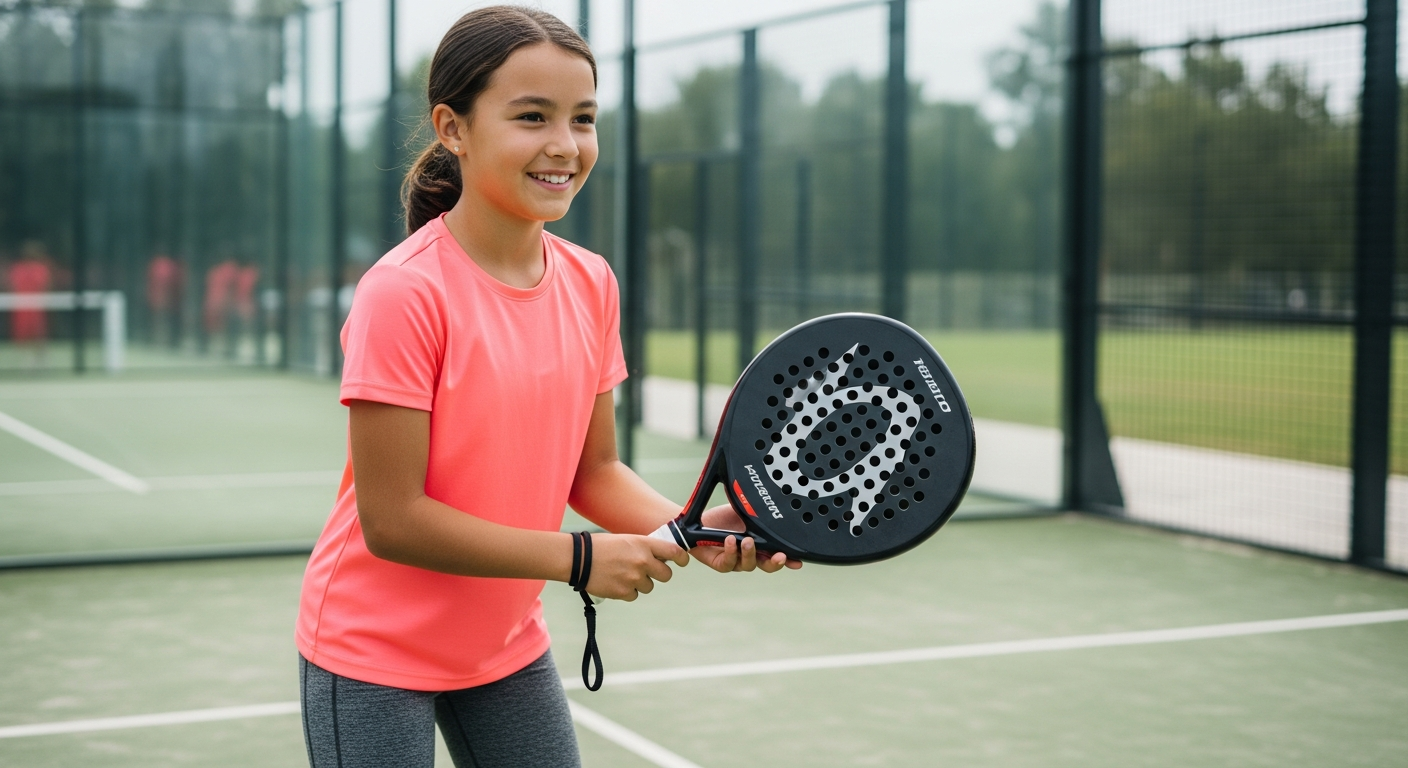
Once you’ve mastered the basics and start playing regularly – typically after 3–6 months – it’s worth moving to a racket that better suits your playing style.
Intermediate: Babolat Air Veron or Oxdog Hyper Pro+ 2.0
Babolat Air Veron 2024 (355 g, hybrid shape, Carbon Flex technology) is a racket for players who want to combine control with offensive play. The soft surface allows dynamic shots without sacrificing precision. Excellent for players who enjoy net play and fast exchanges.
Oxdog Hyper Pro+ 2.0 is a hybrid racket with a sandy surface texture that increases ball spin effect. The PowerRibs system transfers striking energy more efficiently, delivering noticeably more power than entry-level models. Designed for intermediate players with an offensive mindset.
Advanced: Babolat Technical Veron Juan Lebron
Babolat Technical Veron Juan Lebron 2024 is a racket endorsed by one of the best padel players in the world. The hybrid-diamond shape, full-carbon hard surface and Vibrasorb2 vibration dampening system make it a tool for aggressive offensive play. The 2.5 (2025) version is a slightly more comfortable variant for those who want carbon power without the full stiffness of a pro racket.
| Level | Brand | Model | Shape | Weight |
|---|---|---|---|---|
| Beginner | Babolat | Reveal | Round | ~340 g |
| Beginner | Oxdog | Hyper Match 2.0 | Teardrop | ~355 g |
| Intermediate | Babolat | Air Veron 2024 | Hybrid | 355 g |
| Intermediate | Oxdog | Hyper Pro+ 2.0 | Teardrop/Hybrid | ~360 g |
| Advanced | Babolat | Technical Veron JL 2024 | Hybrid/Diamond | ~360 g |
| Advanced | Oxdog | Ultimate Pro Light | Teardrop | ~350 g |
Summary – How to Choose a Padel Racket?
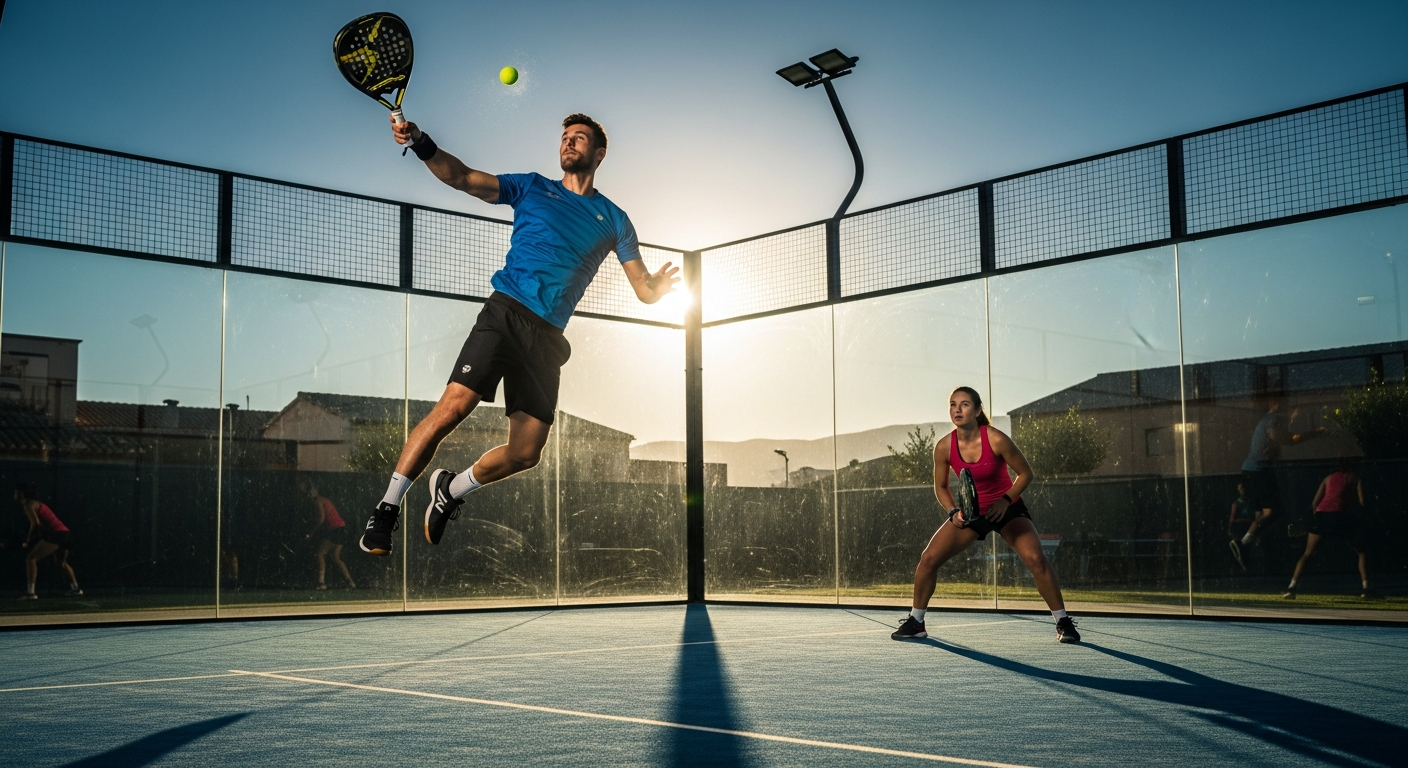
Choosing a padel racket doesn’t have to be complicated. Remember three rules: start with a round, light racket with handle balance. Give yourself a few months and you’ll naturally see which direction your playing style is heading – then your next purchase will be much simpler.
If you want to try rackets in practice before committing to a purchase – join a padel camp, where you can test different models under the guidance of experienced coaches. At rakietycamps.pl you’ll find padel camp packages for all levels – from complete beginners to advanced players. Check the dates and reserve your spot today!
Sources
- Babolat – official website: babolat.com – Padel Racquets
- Oxdog – racket guide: oxdog.net – Padel Guide
- Babolat Air Veron 2024 – review: padel.fyi – Air Veron Review